
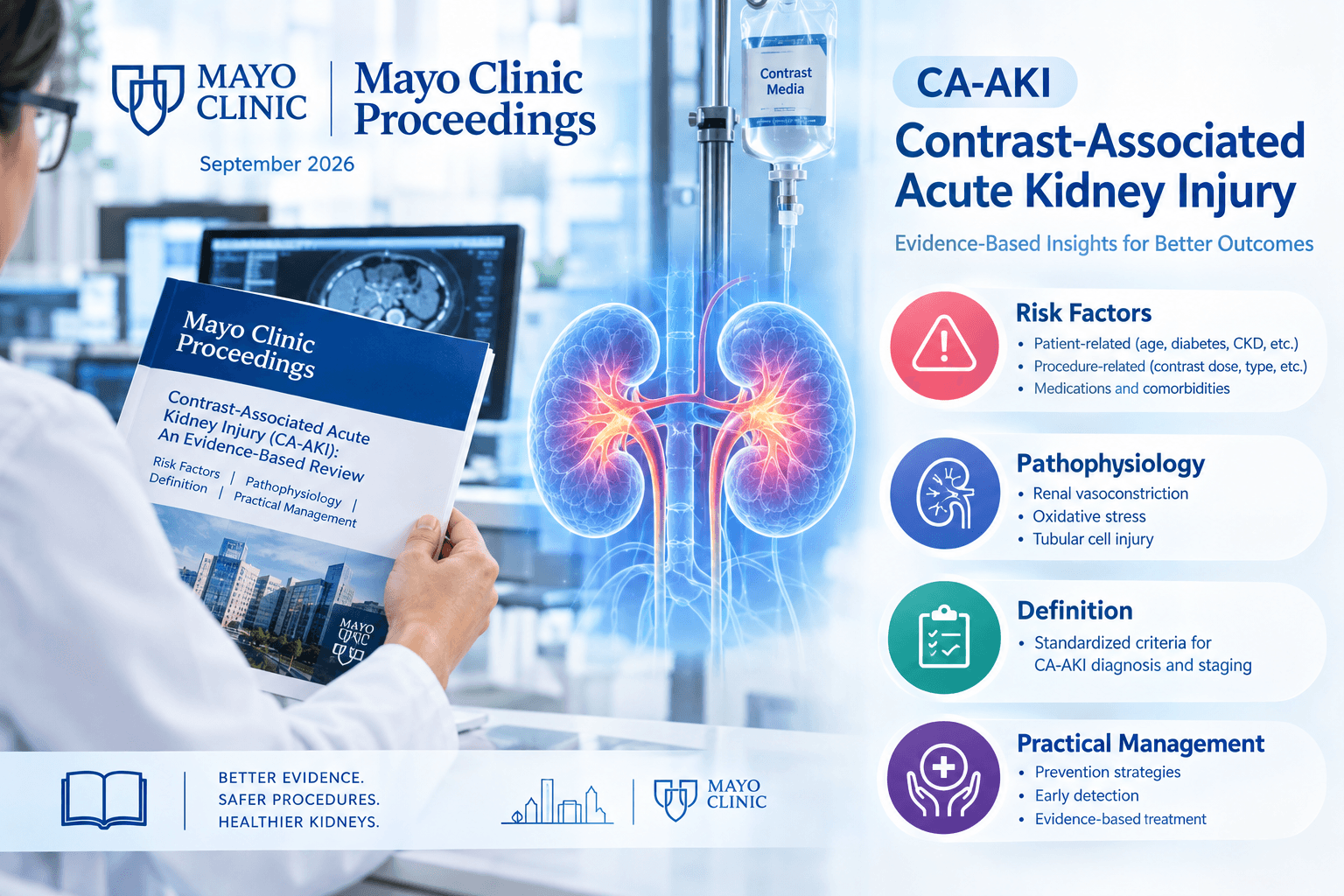
Contemporary Management of Contrast-Associated Acute Kidney Injury
On September 25, 2026, *Mayo Clinic Proceedings* published a comprehensive review titled "Contrast-Associated Acute Kidney Injury: A Comprehensive Review of Risk Factors, Pathophysiology, Definition, and Management."
The clinical terminology shift from "contrast-induced" to "contrast-associated" acute kidney injury (CA-AKI) highlights the complex interplay between contrast exposure, underlying patient comorbidities, and procedural variables.
Pathophysiology, Risk Factors, and Management Framework:
- Pathophysiologic Mechanisms: Key pathways include medullary ischemia, direct tubular epithelial injury, mitochondrial dysfunction, and reactive oxygen species (ROS) accumulation, which may drive adaptive or maladaptive repair leading to chronic kidney disease (CKD).
- Risk Variables: Influenced by baseline patient health status, contrast volume, and specific procedures such as percutaneous coronary intervention (PCI).
- Core Preventive Strategies: Maintaining hemodynamic stability, optimizing fluid/volume status, minimizing contrast dosage, and practicing rigorous nephrotoxin stewardship.
While current therapeutic approaches remain primarily supportive, future directions place strong emphasis on risk stratification, targeted therapies, and digital healthcare solutions to prevent AKI-to-CKD progression.